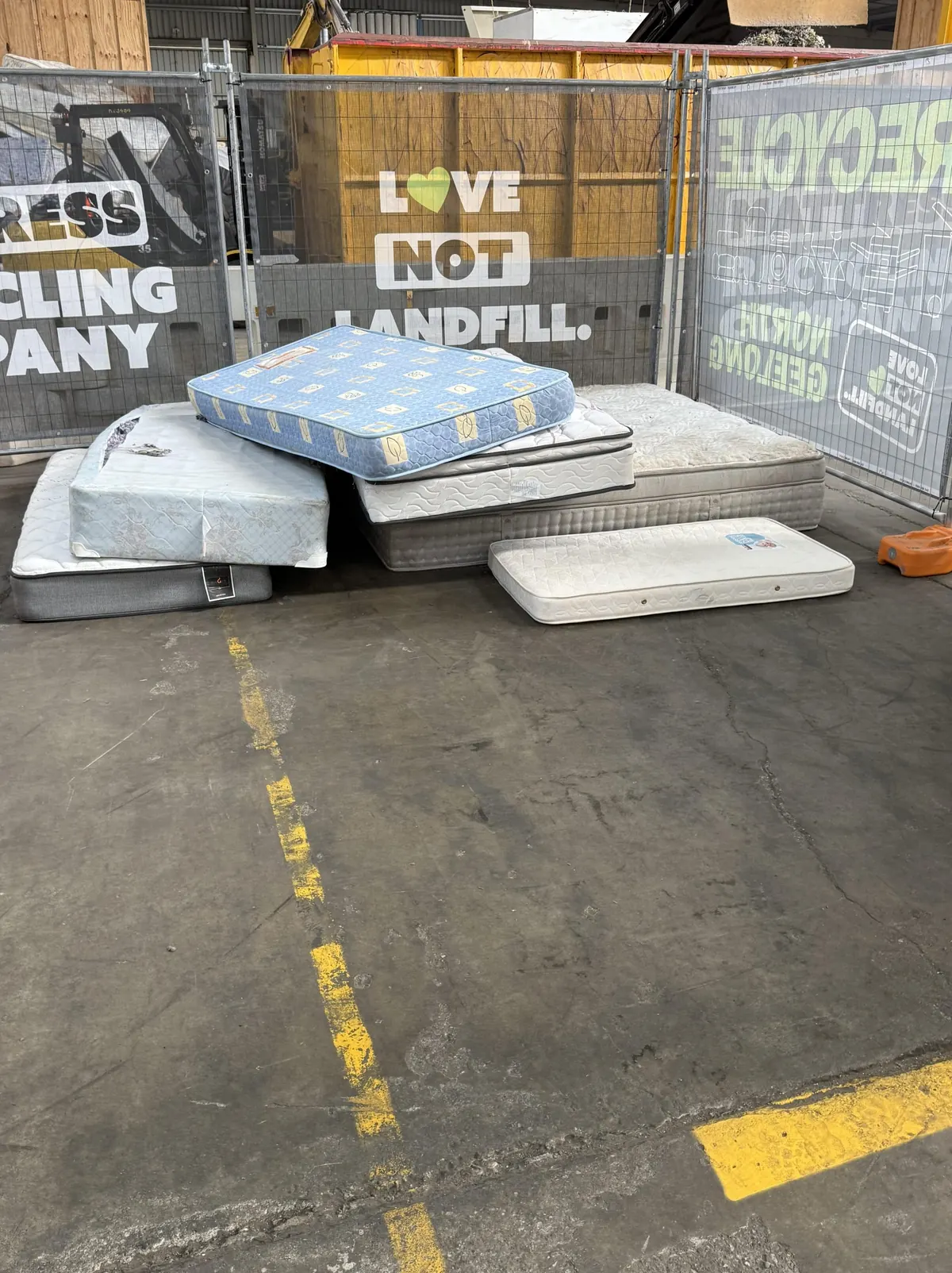
You drop off a mattress
It leaves as baled steel
Every mattress is dismantled on site, in about 38 seconds on average. The springs are pulled out, compressed and baled.

Landfill transfers the problem. Recycling transforms the outcome. Here is where the things you drop off actually go.
Every mattress is dismantled on site, in about 38 seconds on average. The springs are pulled out, compressed and baled.
Polystyrene is up to 98% air. Our densifier presses it out, so three shipping containers of foam become one block about the size of a washing machine.
Clean, dry cardboard is flattened and baled on site, then sent for paper-making.
Furniture in good condition goes to charity and community partners through our Freecycle program, helping people set up a home again.
Whatever is left after sorting is shredded to about a quarter of its volume before it goes to landfill. Less space taken, better compaction.
Every mattress is dismantled on site, in about 38 seconds on average. The springs are pulled out, compressed and baled.
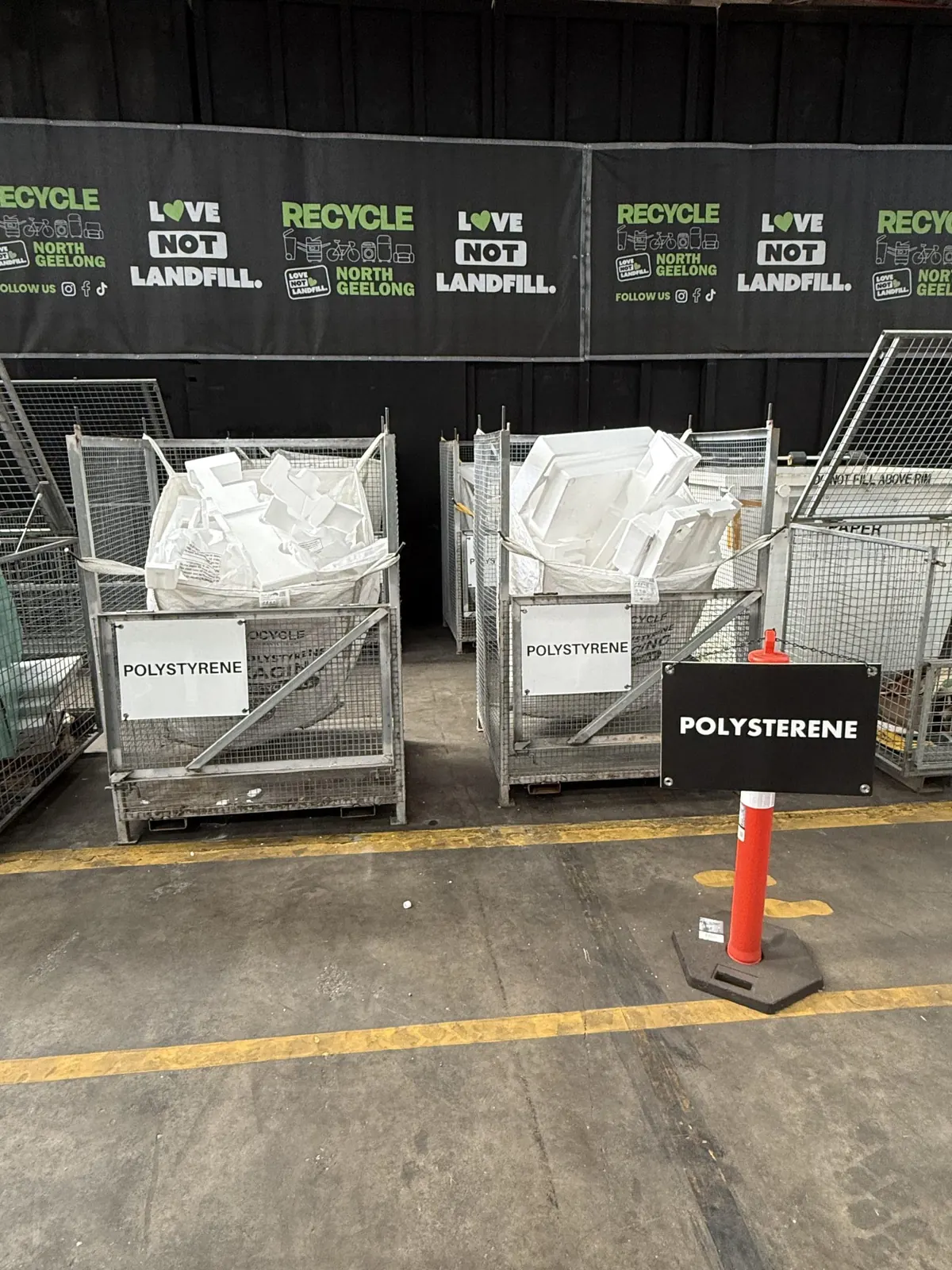
Polystyrene is up to 98% air. Our densifier presses it out, so three shipping containers of foam become one block about the size of a washing machine.
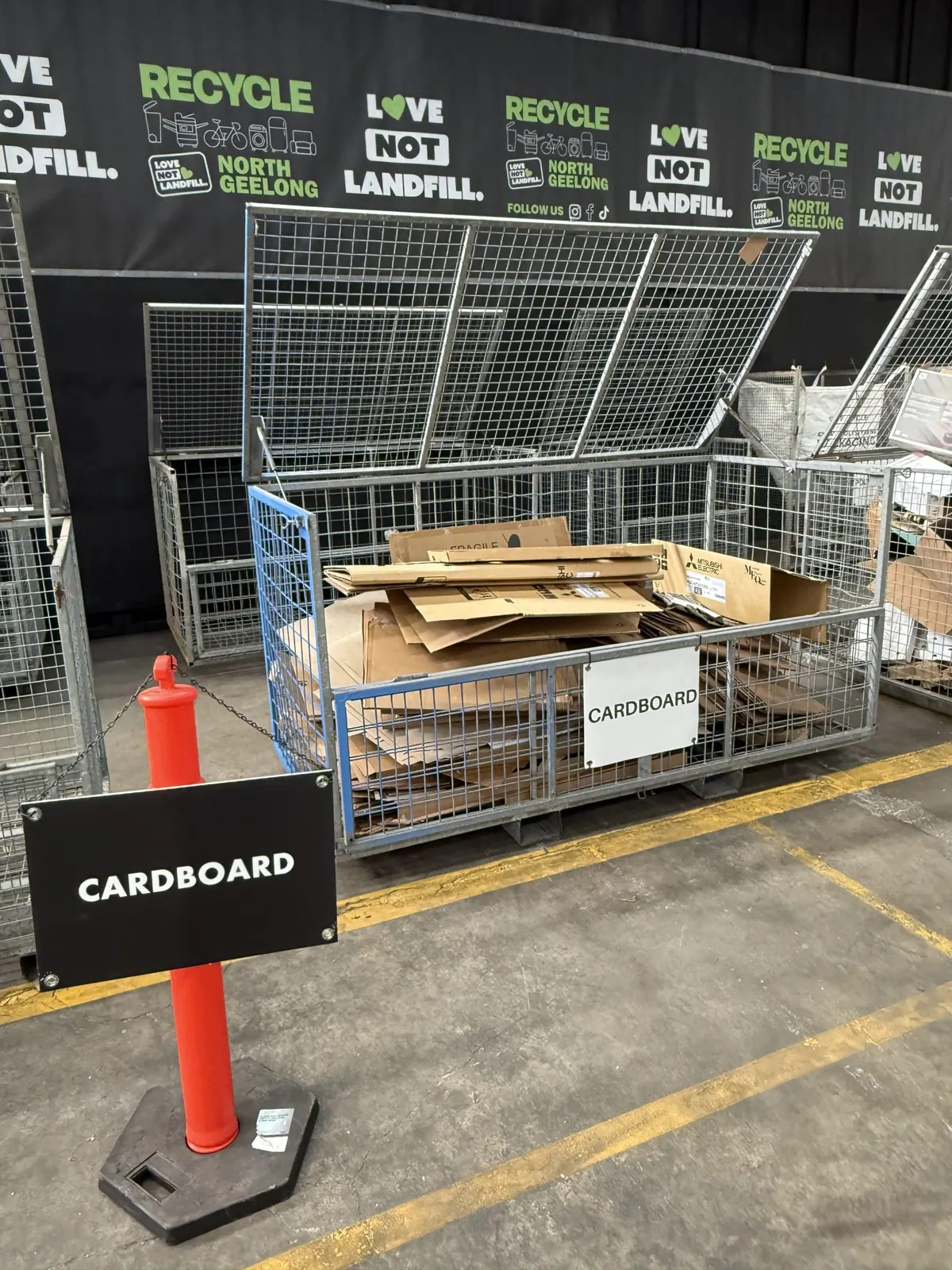
Clean, dry cardboard is flattened and baled on site, then sent for paper-making.
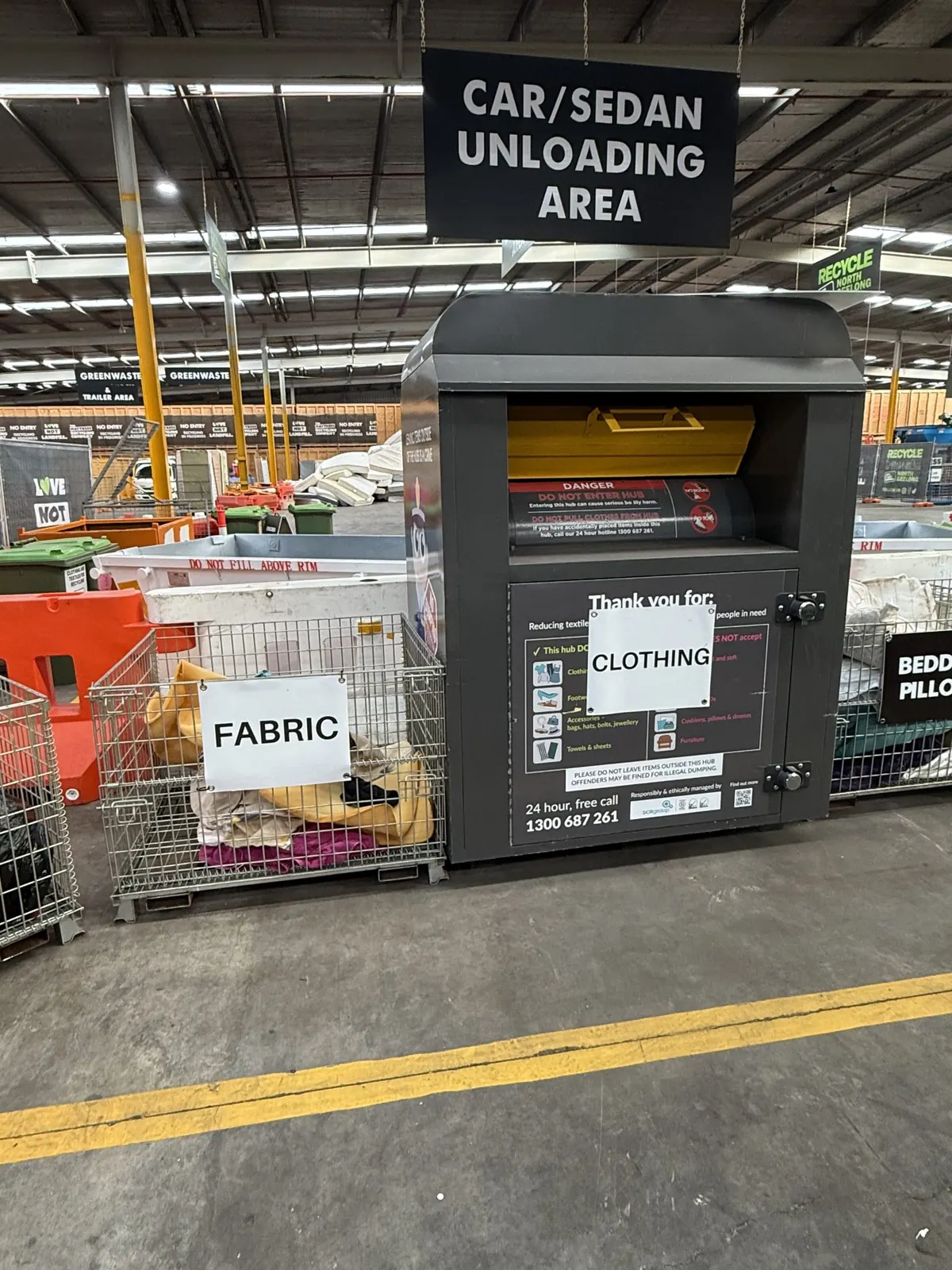
Furniture in good condition goes to charity and community partners through our Freecycle program, helping people set up a home again.
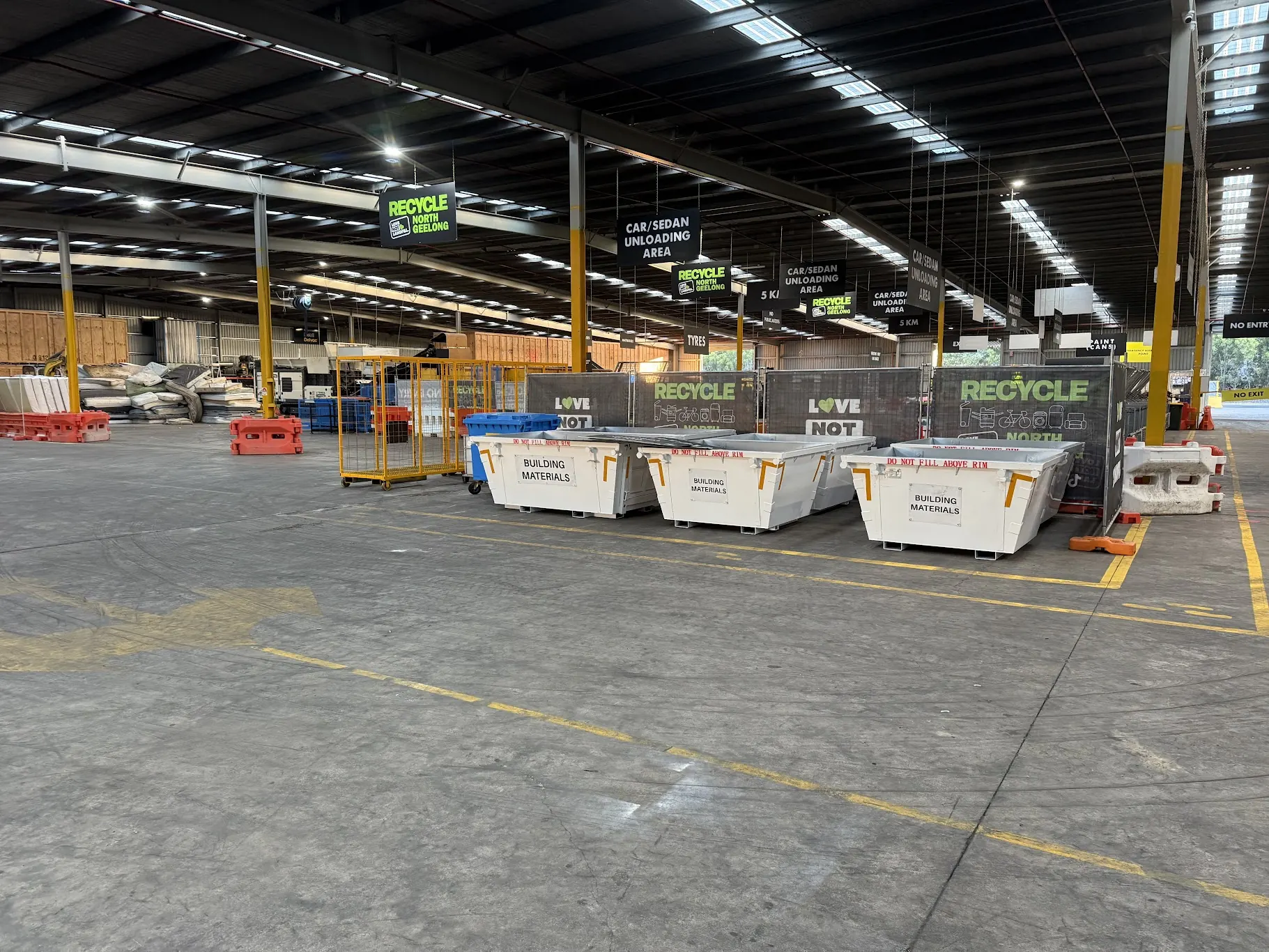
Whatever is left after sorting is shredded to about a quarter of its volume before it goes to landfill. Less space taken, better compaction.
90+ streams are separated on site. These are the ones people bring in most.
Dismantled on site. About 30% of a mattress is steel, and 99% of that steel is recovered and baled. Foam, fabric and timber are separated.
Densified on site. Expanded polystyrene is up to 98% air, so a mountain of foam becomes a dense block that can be made into new products.
Flattened, baled on site and sent for paper-making.
Gas and oil are removed safely, then the steel and other metals are separated for recycling.
Separated and sent for metal recycling.
Handled to the AS/NZS 5377 e-waste standard. Metals, plastics and circuit boards are separated for recovery.
Collected through Paintback, the national paint stewardship program.
Collected at the waste oil station and sent for re-refining.
Kept separate and sent for tyre recycling.
Degassed safely, then the steel is recycled.
Kept separate at the battery station and sent for recycling.
Kept separate for textile reuse and recovery.
Kept separate from general waste for organics processing.
Separated by material so bricks, concrete, timber and metal can be recovered.
Good pieces go to charity and community partners through our Freecycle program. The rest is dismantled so the timber, metal and fabric can be separated.
Sorted for anything recoverable. What is left is shredded to about a quarter of its volume before it goes to landfill. Landfill last.
Every item recovered is one less in landfill, which extends the life of the sites we have.
Recovered steel, paper and plastics reduce the need to mine, log and drill for new ones.
Organic waste in landfill releases methane. Recycling also generally takes less energy than making from scratch.
Recycling creates more jobs per tonne than landfill does.
Affordable, local drop-off gives people a better option than the side of the road.
Diverting waste today means cleaner air, water and land later.
Paintback · Australian Paper Recovery · Apparel Recyclers · Resource (Laverton)